
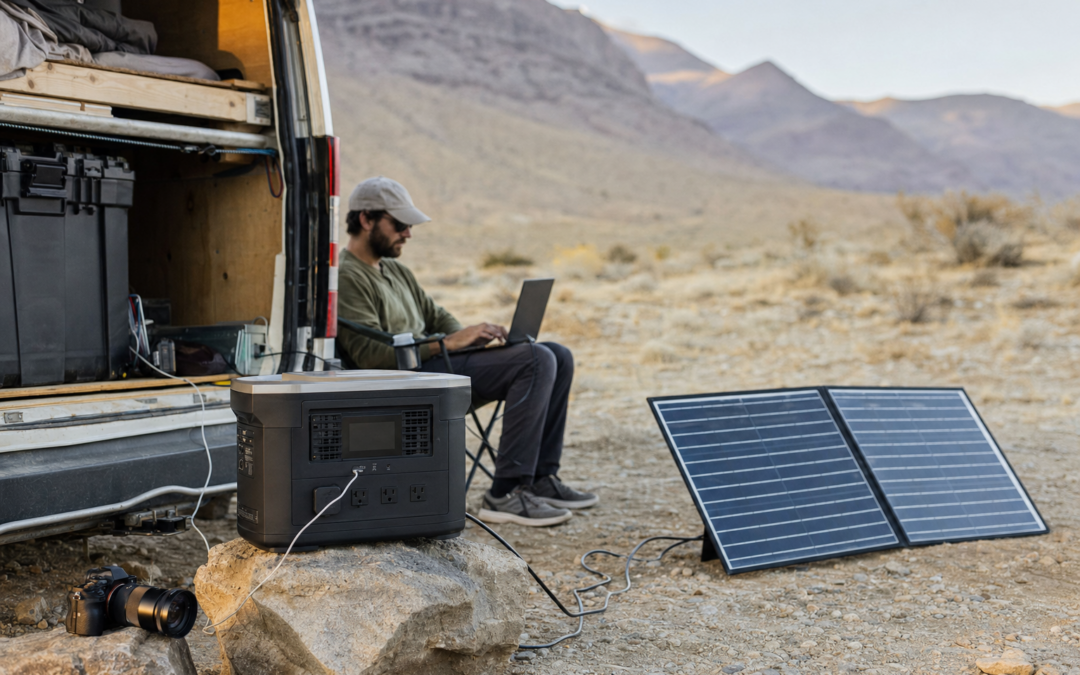
Powering your camper off the grid opens up a world of adventure, but it also brings a set of challenges—especially when it comes to keeping your devices, appliances, and lights running reliably. Whether you’re planning a weekend getaway or an extended boondocking trip, understanding camper power stations, solar basics, and how to manage your electrical loads is key to a hassle-free experience. This practical guide breaks down what you need to know, how to choose the right gear, and how to get the most out of your off-grid setup.
We’ll cover the essentials: what power stations actually do, how solar works for campers, and how to size everything for your needs. You’ll also learn about estimating your camper’s power loads, the basics of charging and storing energy, and how to make smart gear choices for your boondocking adventures. For more hands-on camper gear guides and checklists, visit our camper gear hub.
What Is a Camper Power Station?
A camper power station—also known as a portable power station or solar generator—is a compact, rechargeable battery pack designed to provide AC and DC power for your devices and small appliances. Unlike traditional gas generators, power stations run silently, don’t require fuel, and can be recharged from a variety of sources such as wall outlets, car chargers, or solar panels.
These units typically feature multiple output ports (AC outlets, USB ports, 12V sockets) and an integrated inverter to convert stored DC battery power into usable AC electricity. Modern power stations use lithium-ion or LiFePO4 batteries for longer life and lighter weight, making them ideal for RVs, camper vans, and tent camping alike.

BLUETTI Elite 30 V2 Portable Power Station 288Wh 600W LFP Solar Generator Review — BLUETTI generators gear aimed at buyers who want clear specs before they click through. Key figures include 9.4 lbs, 600W, 1500W.
Why Solar Power for Boondocking?
Boondocking—camping without hookups—means you’re responsible for generating and managing all your own electricity. Solar power is the most popular solution for this because it’s quiet, clean, and renewable. The sun’s energy can keep your batteries topped off day after day, letting you stay out longer without running a noisy generator or driving to recharge.
Solar setups for campers range from small, portable panels to permanent roof installations. A portable solar panel can be moved to follow the sun, while a roof-mounted system is always ready to go. Both types work by converting sunlight into DC electricity, which is then regulated and stored in your camper’s battery or a portable power station.
Solar is especially useful for topping up batteries during the day, running essentials like lights, fans, and charging devices, and even powering small appliances if you have a large enough system.
Understanding Your Power Loads
The first step in designing your off-grid power system is figuring out how much electricity you actually use. You’ll want to make a list of all devices and appliances you plan to run—think phones, laptops, lights, water pumps, fans, refrigerators, and small kitchen gadgets. For each item, note the wattage (usually found on a label or in the manual) and estimate how many hours per day you’ll use it.
- AC loads: Devices that plug into a standard outlet, like laptops, coffee makers, or TVs. These require an inverter to convert DC battery power to AC.
- DC loads: Items that run directly off 12V or USB, such as LED lights, water pumps, or phone chargers. These are more efficient because they don’t require inversion.
Add up the total watt-hours (Watt x Hours) for each device to get your daily energy use. This number is crucial for choosing the right battery and solar panel size.

Daran Portable Power Station 89.6Wh LiFePO4 Battery 100W(200W Peak) Solar Review — Practical generators from Daran, summarized from hub features and listed measurements. Key figures include 6.5, 3.3, 89.
Choosing the Right Power Station
Power stations come in a wide range of sizes and capabilities. Picking the right one depends on your expected power loads, how long you want to stay off-grid, and how often you can recharge. Key specs to consider:
- Battery capacity (Wh): Measured in watt-hours, this tells you how much energy the power station can store. More capacity means more runtime between charges.
- AC output (Watts): The maximum power the inverter can supply at one time. Make sure it’s high enough for your largest device or combination you plan to use simultaneously.
- Port selection: Check for enough AC, DC, and USB ports for your gear.
- Recharge methods: Most units can be charged via wall outlet, car, or solar panel. Look for compatibility with your preferred solar setup.
- Weight and size: Consider portability if you’ll be moving the station around camp.
For quick comparisons and in-depth reviews, see the featured products throughout this guide.
How Solar Panels Work with Power Stations
Solar panels generate DC electricity when exposed to sunlight. When paired with a portable power station, the panel connects via a charging cable (often Anderson, XT60, or proprietary), and the station manages both charging and battery protection internally. The solar panel’s wattage and the power station’s maximum input determine how fast you can recharge.
For example, a 100-watt panel in full sun may deliver 70-80 watts to your power station, depending on conditions and efficiency. If your power station holds 288Wh, it could fully recharge in about 4 hours of peak sunlight (288Wh ÷ 75W = ~3.8 hours), not accounting for losses or partial sun.
Most portable power stations are compatible with a range of solar panels, as long as the voltage and connector match the unit’s input specs. Always check compatibility before purchasing a panel.

HOWEASY Portable Power Station,120W(240W Peak) Solar Generator Review — An editorial look at this HOWEASY option for generators — specs first, marketing second. Key figures include 8 , 2 , 6.6 .
Estimating Your Solar Needs
To size your solar array, start with your daily power consumption (in watt-hours) and divide by the average number of peak sun hours you expect at your campsite (typically 4-6 hours per day in much of the US). Add 20-30% to account for cloudy days, panel orientation, and system losses.
For example, if you use 400Wh per day and expect 5 hours of good sun, you need at least an 80-watt panel (400Wh ÷ 5h = 80W). Round up for flexibility and future needs. If you want to be able to fully recharge your power station and run loads at the same time, consider going larger—two 100-watt panels gives you more margin.
Portable folding panels are a great match for power stations, letting you chase the sun and pack up quickly when breaking camp.
Storing and Using Power Efficiently
Even with a robust solar and battery setup, power management is important. Here are some tips for stretching your stored power during boondocking:
- Use DC-powered devices: Whenever possible, choose 12V or USB gadgets—these are more efficient than running AC devices through an inverter.
- Switch to LED lighting: LED bulbs use a fraction of the power of incandescent or halogen lights.
- Be mindful of “phantom loads”: Many electronics draw power even when “off” (like TVs or chargers). Unplug devices when not in use.
- Monitor your battery state: Many power stations have a display showing remaining charge and real-time power use. Keep an eye on these to avoid running out unexpectedly.
- Charge during the day: Run high-drain devices while the sun is shining so solar power is being used directly, not stored and then drawn from the battery.

MARBERO 200W Portable Power Station 148Wh Camping Solar Generator Laptop Review — A MARBERO pick in Generators that focuses on real-world usability Key figures include 40, 000mAh, 110V.
Recharging Options Beyond Solar
Solar is the most popular off-grid charging method, but sometimes weather or shade makes it less reliable. Most power stations can also be charged:
- From a wall outlet: Useful before you leave home or at a campground with hookups. Fastest recharge option.
- From your vehicle: Using a 12V car adapter, you can charge the power station while driving. This is slower than AC charging but great for topping up between campsites.
- Via small wind turbines or other renewables: Some advanced users supplement with wind or even micro-hydro, but this is less common for typical campers.
Having more than one way to recharge gives you flexibility and peace of mind, especially on longer trips or in unpredictable weather.
Integrating Power Stations with Your Camper’s Electrical System
Many campers and RVs have built-in batteries and electrical systems. Portable power stations can complement these by:
- Powering sensitive electronics: Use the clean AC output for laptops, CPAP machines, or cameras, separate from your main system.
- Serving as backup: In case your main camper battery runs low, a power station can keep lights and essentials running.
- Running outdoor or remote gear: Bring the power station outside to run camp lights, a portable fridge, or charge devices away from your rig.
Some users also use their power station to recharge the camper’s main battery via a DC cable, but this should be done carefully to avoid over-discharging the station. Always consult the manuals for both devices before connecting systems together.
Maintenance Tips for Power Stations and Solar Panels
To keep your power setup working reliably, regular maintenance is important:
- Keep panels clean: Dust, pollen, and bird droppings reduce solar output. Wipe panels gently with a soft cloth and water as needed.
- Store batteries properly: Lithium batteries last longest when kept between 20% and 80% charge. If storing for months, check charge every few months.
- Protect from extreme temperatures: Don’t leave your power station or panels in freezing cold or blazing sun for extended periods.
- Check cables and connections: Inspect for damage or corrosion. Replace frayed or damaged cords immediately.
- Update firmware if available: Some brands release updates to improve charging or display functions. Follow manufacturer instructions.
Well-maintained equipment will last longer and perform better on every trip.
Budgeting and Planning Your Setup
Building a boondocking power setup can be as simple or as sophisticated as you need. For weekend trips running lights and charging phones, a small power station and folding panel may be plenty. For extended off-grid stays with a fridge, fans, and laptops, you’ll want a larger battery, more solar, and possibly a backup charging method.
When budgeting, consider not just the cost of the power station and solar panels, but also cables, adapters, mounting hardware, and any extra accessories (like extension cords or weatherproof cases). Investing in quality gear up front saves frustration and replacement costs down the road.
Start with your must-have devices, work out your daily power needs, and size your system for at least a day or two of cloudy weather. If you’re unsure, it’s smart to buy slightly more capacity than you think you’ll need—the freedom to camp longer or add a new gadget later is worth it.
Key Takeaways for Boondocking Power Success
- Start by understanding your daily power needs—list every device and estimate usage.
- Choose a portable power station with enough capacity and the right outlets for your gear.
- Pair with solar panels sized for your energy use and local sun conditions.
- Prioritize energy efficiency: use LED lights, DC devices, and avoid leaving things plugged in.
- Have a backup recharge plan—vehicle charging or wall outlets—just in case.
- Maintain your equipment for long-term reliability and performance.
With the right setup and a bit of planning, you’ll have reliable power wherever your adventures take you. For more gear tips, reviews, and hands-on checklists, check out our camper gear resource hub.
Essential Camper Power Station and Solar Checklist
Before heading out for a boondocking trip, use this checklist to make sure your power station and solar setup are ready for the road. A little preparation goes a long way in preventing unexpected power outages and maximizing your comfort off-grid.
- Power Station Fully Charged: Top off your battery before leaving home using AC power or your vehicle’s 12V outlet.
- Solar Panels Checked: Inspect for cracks, loose connections, or dirt. Clean panels for maximum efficiency.
- All Cables and Adapters Packed: Bring every cable needed for charging from AC, DC, and solar sources. Don’t forget extension cords or MC4 adapters for solar panels.
- Device Wattage List: Bring your list of device wattages and estimated daily usage for quick reference.
- Backup Charging Options: Pack a car charger or a small backup generator, especially for extended trips or cloudy forecasts.
- Fuses and Spare Parts: Carry extra fuses for your power system and any unique adapters.
- Battery Monitor or Multimeter: Useful for checking battery voltage and troubleshooting issues on the go.
- Sun Exposure Plan: Scout your camping spot for the best solar exposure and plan panel placement accordingly.
- Weather Awareness: Check the weather forecast and adjust your solar expectations if clouds or rain are likely.
Common Mistakes When Using Camper Power Stations and Solar
Even experienced campers sometimes make mistakes with off-grid electrical setups. Here are a few of the most frequent issues and how to avoid them:
- Underestimating Power Needs: Many new boondockers underestimate how much energy daily devices consume. Always calculate your watt-hour use and choose a battery with extra capacity for cloudy days.
- Improper Solar Panel Placement: Solar panels need direct sunlight. Placing them in the shade or failing to adjust their angle reduces charging speed dramatically.
- Overloading the Power Station: Plugging in too many high-wattage devices at once can trip the inverter or damage the unit. Know your station’s continuous and peak output ratings.
- Neglecting Battery Maintenance: Letting a battery sit empty for weeks or months can shorten its lifespan. Recharge regularly, even in storage.
- Forgetting Temperature Limits: Lithium batteries and inverters can be damaged by extreme cold or heat. Protect your gear from the elements and avoid charging below freezing.
- Loose or Corroded Connections: Check all terminals and connectors regularly. A loose cable or corrosion can cause power loss or system failure.
Maintaining Your Camper Power Station and Solar Setup
Regular maintenance helps ensure your off-grid power system is reliable and long-lasting. Here are some simple steps to keep your batteries and solar panels in top condition:
- Keep Batteries Charged: Even when not in use, recharge your power station every 1–3 months. Avoid storing it fully depleted.
- Inspect Solar Panels: Wipe off dust, pollen, and bird droppings periodically with a soft cloth and water. Avoid abrasive cleaners that could scratch the glass.
- Check Connections: Inspect all cables, plugs, and terminals for signs of wear, corrosion, or looseness. Tighten and clean as needed.
- Monitor Battery Health: Many modern power stations have built-in displays showing battery cycles and health. Refer to your manual for specific care guidelines.
- Store Properly: Keep your power station and solar panels in a cool, dry place when not in use. Avoid direct sunlight or freezing temperatures in storage.
- Update Firmware: Some advanced power stations offer firmware updates for improved performance—check the manufacturer’s website occasionally.
If you notice a significant drop in battery capacity or charging speed, consult the manufacturer’s troubleshooting guide or reach out to customer support.
Frequently Asked Questions About Camper Power Stations and Solar
How long will my power station last while boondocking?
The runtime depends on your power station’s capacity (measured in watt-hours) and the total wattage of devices you’re running. For example, a 500Wh power station running a 50W fridge and 20W of lights for 8 hours would be nearly depleted. Always leave a buffer for unexpected needs.
Can I run my camper’s air conditioner off a portable power station?
Most portable power stations are not designed to handle the high surge and continuous wattage of an RV air conditioner. You would need a very large (and expensive) power station, and even then, runtime would be limited. Consider using fans or a 12V swamp cooler for off-grid cooling instead.
Do I need a charge controller with my solar panels?
If your solar panels are connected directly to a camper battery bank, a charge controller is essential for preventing overcharging. Many portable power stations have built-in MPPT or PWM charge controllers, so you can connect solar panels directly (within the recommended voltage range). Always check your user manual.
Can I use my camper’s alternator to recharge my power station?
Yes, many power stations include a 12V car charging cable that lets you recharge the battery while driving. This is slower than AC or solar charging but is a great backup option.
How much solar do I really need?
As a general rule, aim for at least as many watts of solar as your daily watt-hour usage (e.g., 400Wh/day = 100W–200W panel in good sun). Cloudy weather, shade, and shorter winter days all reduce solar output, so sizing up is wise for flexibility.
What’s the difference between lithium-ion and LiFePO4 batteries?
LiFePO4 (Lithium Iron Phosphate) batteries are heavier but last longer and are more stable than standard lithium-ion cells. They’re ideal for frequent use and harsh conditions, though lithium-ion batteries remain popular for their lighter weight and lower cost.
Is it safe to leave my power station plugged into solar all the time?
Most modern power stations have built-in protections against overcharging, so it’s generally safe. However, always follow the manufacturer’s recommendations and disconnect if you notice swelling, overheating, or other unusual behavior.
Quick Tips for Maximizing Off-Grid Power
- Use DC devices where possible: They’re more efficient and bypass the inverter’s energy loss.
- Stagger high-wattage loads: Don’t run everything at once—spread out charging and appliance use.
- Take advantage of daylight: Run power-hungry devices while the sun is shining and solar panels are active.
- Monitor your usage: Many power stations display real-time input/output—keep an eye on it to avoid surprises.
- Pack a flashlight or headlamp: In case you need to troubleshoot your system at night.