Camping hammocks have become a go-to choice for outdoor enthusiasts looking for a lightweight, comfortable way to sleep under the stars. If you’re new to hammock camping, the setup and safety considerations can seem a little daunting compared to traditional tents. However, with the right gear and some practical know-how, you’ll find that hammocks offer flexibility, comfort, and a unique connection to the outdoors.
In this comprehensive beginner’s guide, we’ll walk you through the essentials of choosing, setting up, and safely using a camping hammock. Whether you’re planning your first solo trip or just want to try something new at your favorite campground, you’ll find step-by-step advice and expert tips to make your hammock experience a success.
For more detailed guides and gear recommendations, check out our outdoor gear hub.
Why Choose a Hammock for Camping?
Hammocks offer several advantages for campers, especially beginners. First, they’re lightweight and pack down smaller than most tents, making them ideal for backpackers and anyone with limited space. Hammocks also allow you to camp on uneven or rocky ground, as long as you have two sturdy anchor points. Plus, many campers find that sleeping in a hammock can be more comfortable than sleeping on the ground, particularly if you struggle with pressure points or back pain.
Another key benefit is versatility. Many camping hammocks can double as daytime loungers, and with the right accessories, they can protect you from rain and insects just as well as a tent can. However, hammock camping does require a bit of a learning curve—especially when it comes to setup and safety.
Types of Camping Hammocks
Before you invest in your first hammock, it’s important to understand the different types available. Here are the main categories:
- Single Hammocks: Designed for one person, these are usually lighter and more compact, with widths around 4–5 feet. They’re an excellent pick for solo hikers or those who want to keep their pack weight down.
- Double Hammocks: Wider and often stronger, these hammocks can fit two people, or provide more room to sprawl out solo. They typically support higher weight limits, up to 500 lbs or more.
- Integrated Bug Net Hammocks: Perfect for buggy environments, these have a built-in mesh canopy to keep mosquitoes and other insects out.
- Hammock Tents: These are more like suspended shelters, often including integrated rainflies, bug nets, and pockets for gear storage. They’re designed for all-season use and maximum protection.
For beginners, a simple single or double hammock with a separate bug net and rainfly is a great way to start. You can always upgrade as your needs evolve.

Durable Hammock 400 lb Capacity, Nylon Camping Hammock Chair Review — An editorial look at this SEWANTA option for hammocks — specs first, marketing second. Key figures include 400 lbs, 500 lbs, 10 .
Key Features to Look For in a Beginner Hammock
Not all hammocks are created equal, and a few key features can make your experience much more enjoyable and safe. When shopping for your first camping hammock, consider the following:
- Weight Capacity: Always choose a hammock with a weight rating that exceeds your total load (including you and any gear you’ll keep in the hammock). Many entry-level models support 400–500 lbs, which is plenty for most campers.
- Material: Nylon and polyester are common for camping hammocks, offering a good balance of strength, comfort, and quick drying. Ripstop nylon is especially durable for outdoor use.
- Suspension System: Look for hammocks that include tree straps or webbing (not just rope), as these are easier on trees and allow for simple, adjustable setup. Tree-friendly straps are often required in many campgrounds.
- Size: Check the length and width; a hammock should be at least 2 feet longer than your height for a flat lay. Wider hammocks (over 5 feet) offer more comfort for side sleeping or sprawling out.
- Accessories: Consider if the hammock includes a bug net, rainfly, or storage pockets. These add convenience and protection, especially in unpredictable weather.

Kootek Camping Hammock 400lbs Capacity Outdoor Camping Essentials Review — A Kootek pick in Hammocks that focuses on real-world usability Key figures include 18, 1 , 400 lbs.
How to Set Up Your Camping Hammock
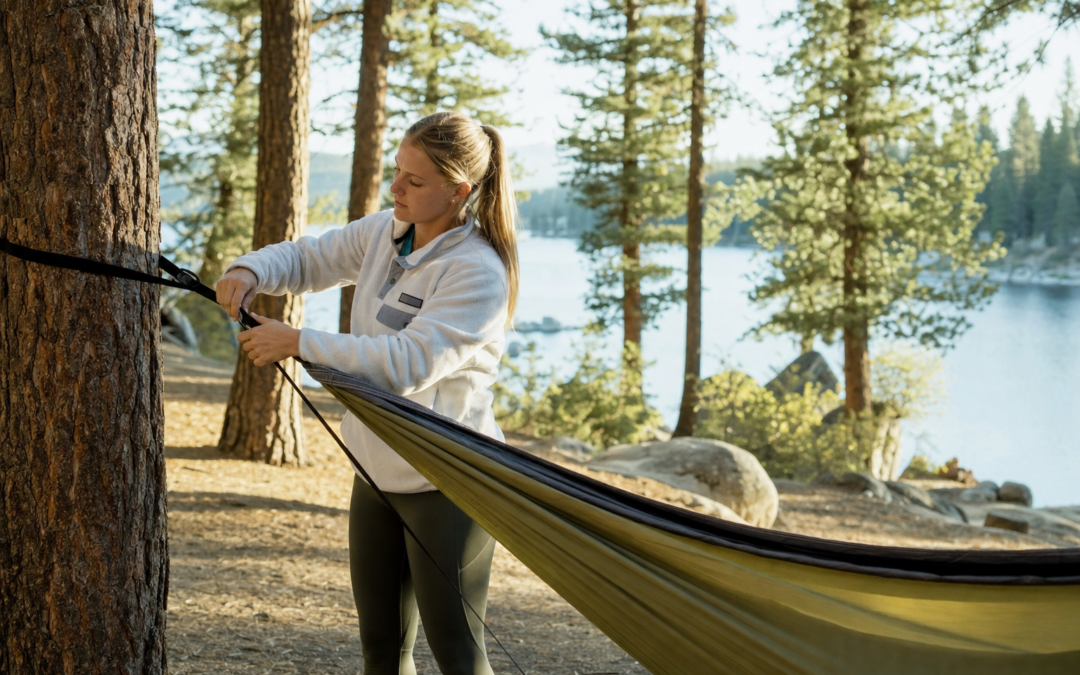
Setting up a hammock is straightforward with a little practice, but a few details can make a big difference in comfort and safety. Here’s a step-by-step guide for beginners:
1. Choose the Right Spot
- Look for two healthy, sturdy trees about 12–15 feet apart. Trees should be at least 6 inches in diameter—avoid saplings or dead branches.
- Check above for dead limbs (“widowmakers”) and avoid areas with ant nests, poison ivy, or unstable ground.
2. Attach Tree Straps
- Wrap each tree strap around the trunk at about head height (5–6 feet off the ground). Use wide straps (at least 1 inch) to prevent tree damage.
- Pass the strap through its loop or use the included carabiner, depending on the system.
3. Hang the Hammock
- Clip the hammock’s carabiners to the straps. Adjust the sag so the hammock hangs at a 30-degree angle from the straps to the ground.
- The lowest point of the hammock (when you sit in it) should be about chair height—roughly 18 inches off the ground.
4. Add Accessories
- If using a bug net, slide it over the hammock and zip it closed after you get in.
- Set up a rainfly or tarp above your hammock, angled to shed water away from you. Secure the corners well, especially in windy conditions.
5. Test and Adjust
- Sit in the hammock gently to test the setup. If it feels too tight or sags too much, adjust the straps as needed.
- Make sure all knots, buckles, and carabiners are secure before settling in for the night.
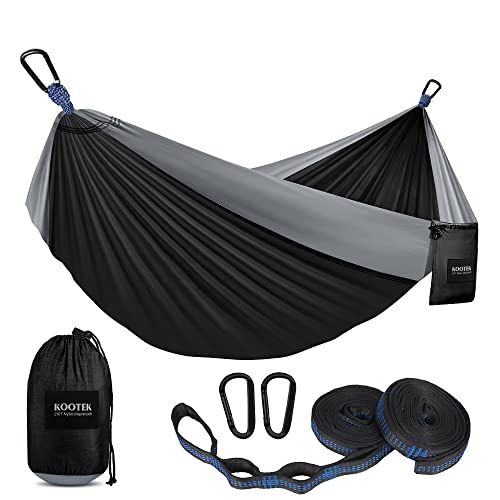
Kootek Camping Hammock 500lbs Capacity Outdoor Camping Essentials Review — Kootek hammocks gear aimed at buyers who want clear specs before they click through. Key figures include 18, 1 , 500 lbs.
Basic Hammock Safety Tips
Hammock camping is generally safe, but following a few guidelines will protect you and the environment:
- Use tree-friendly straps: Avoid rope, which can girdle trees and cause long-term damage. Always use wide webbing straps.
- Inspect anchor points: Check trees, straps, and gear before each use. Avoid dead or unhealthy trees and replace worn straps.
- Hang at a safe height: Never hang your hammock more than 18 inches off the ground. This reduces the risk of injury if you fall out.
- Keep a clear area underneath: Remove rocks, sticks, or other hazards from under your hammock. If you do fall, you want a soft landing.
- Be aware of weather: Hammocks offer less protection from cold and wind than tents. Always check the forecast and bring appropriate insulation (like underquilts or sleeping pads).
- Don’t overload: Stick to the manufacturer’s weight limit, including your gear.
Staying Warm in a Hammock
One of the biggest surprises for new hammock campers is how quickly you can get cold—even in mild temperatures. Because air circulates below you, you lose body heat faster than you would on the ground. Here are some proven ways to stay warm:
- Use an underquilt: This insulated blanket hangs underneath your hammock, trapping warmth without being compressed by your body.
- Try a sleeping pad: A closed-cell foam or inflatable pad adds insulation and can help flatten out your lay.
- Bring a top quilt or sleeping bag: Use a quilt or sleeping bag rated for the overnight lows you expect.
- Wear layers: Dress in moisture-wicking base layers, and add a beanie and warm socks for extra comfort.
- Block wind: Set up your rainfly close to the hammock or use a dedicated hammock sock to cut down on wind chill.
Even in summer, plan for nighttime temperatures to drop. Over-preparing is much better than shivering through the night.
Protecting Against Bugs and Rain
Exposure to the elements is part of the hammock experience, but with the right setup, you can stay dry and bite-free:
- Bug Nets: Many hammocks come with integrated bug nets, but you can also buy separate ones that slide over the hammock. Make sure zippers are fully closed before you settle in for sleep.
- Rainflies and Tarps: A dedicated hammock tarp or rainfly should cover your hammock with at least 6–12 inches of overhang on each side. Stake out the corners securely and angle the tarp to direct water away from you.
- Drip Lines: Tie short pieces of string onto your suspension between the hammock and the straps; these act as “drip lines” to prevent water from wicking down into your hammock during rain.
- Site Selection: Avoid pitching your hammock in low spots where water could collect or run underneath during a downpour.
With a little planning, you can enjoy a dry, bug-free night even in challenging conditions.
Getting Comfortable: Laying Flat and Avoiding Shoulder Squeeze
One of the most common beginner complaints is feeling cramped or curved in a hammock. Here’s how to maximize comfort:
- Lay diagonally: Instead of lying straight, angle your body across the hammock. This flattens out the fabric, letting you lay flatter and avoid the “banana” shape.
- Choose a wider hammock: Hammocks over 5 feet wide give you more space to spread out and reduce shoulder squeeze.
- Adjust the sag: A 30-degree hang angle is ideal. Too tight, and you’ll feel like you’re in a cocoon; too loose, and you’ll sag uncomfortably.
- Use a pillow: A small camp pillow or even a stuff sack filled with clothes can add neck support and make sleeping more natural.
- Practice at home: Try setting up your hammock in the backyard or at a local park before your trip. This helps you dial in the comfort and setup routine.
Hammock Camping Etiquette and Leave No Trace
Responsible hammock camping is about more than comfort—it’s also your responsibility to protect the outdoors for others. Follow these etiquette and Leave No Trace principles:
- Use tree-friendly straps: Never use rope or thin cord, which can damage bark and harm trees.
- Check local rules: Some parks and campgrounds prohibit or limit hammock use. Always check regulations before setting up.
- Avoid damaging vegetation: Don’t clear underbrush or trample plants under your hammock. Stick to established sites when possible.
- Pack out all trash: Don’t leave food, wrappers, or gear behind. Animals can be attracted to even small scraps.
- Respect quiet hours: Hammocks often encourage socializing, but be mindful of noise in shared campgrounds.
By following these guidelines, you’ll help keep hammock camping welcome and sustainable wherever you go.
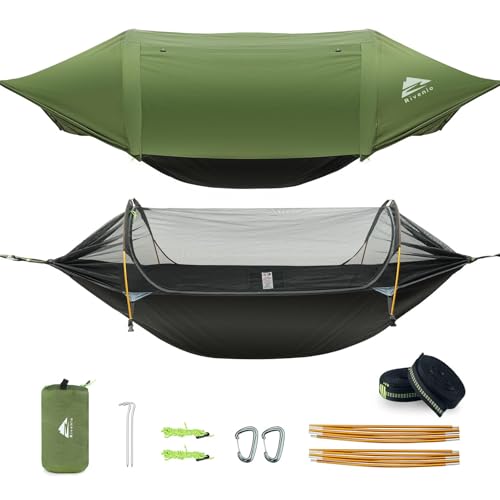
Rivenlo Camping Hammock Tent with Mosquito Net & RainFly Review — An editorial look at this Rivenlo option for hammocks — specs first, marketing second. Key figures include 3 in, 1 , 2 .
Choosing the Right Suspension System
The suspension system is just as important as the hammock itself. A good setup is safe, easy to adjust, and gentle on trees. Here’s what to look for:
- Tree Straps: Look for straps that are at least 1 inch wide and 10–12 feet long. Wider straps distribute weight better and are required in many parks.
- Carabiners: Most hammocks come with lightweight aluminum carabiners. Make sure they’re rated for at least 400 lbs.
- Buckles, Loops, or Knots: Adjustable buckles or daisy-chain loops make it easy to fine-tune your hang. If your system uses knots, learn a few basics like the bowline or marlinspike hitch.
- Never use hardware that can damage trees: Avoid metal hooks, screws, or anything that pierces the bark.
For beginners, a hammock that comes with complete straps and carabiners is the easiest way to get started. Double-check that your kit includes everything you need before your first trip.
Real-World Hammock Camping Tips for Beginners
Experienced hammock campers have learned a few tricks that can make your first nights much more enjoyable. Here are some practical tips:
- Bring a small ground tarp: Place this under your hammock to keep your feet clean and provide a spot for gear.
- Use a ridgeline: A fixed-length ridgeline (paracord tied between the suspension points above the hammock) helps maintain the ideal sag every time you set up.
- Keep essentials within reach: Hang a gear organizer or stuff sack from your ridgeline for a headlamp, water bottle, and phone.
- Practice getting in and out: Enter from the middle, sit down gently, then swing your legs in. To exit, reverse the process slowly—this minimizes tipping.
- Plan for rain: Always set up your rainfly first if bad weather is possible. This way, you can hang your hammock underneath without getting it wet.
- Pack extra straps: Sometimes trees are farther apart than expected. Having an extra set of straps or extenders can save the day.
- Test your setup before dark: Arrive at camp early enough to set up and make adjustments in daylight.
Common Hammock Camping Mistakes and How to Avoid Them
Even seasoned campers make mistakes when switching to hammocks. Here are some of the most frequent slip-ups, and how you can avoid them:
- Hanging too tight or too loose: Both extremes are uncomfortable. Aim for a 30-degree angle from straps to ground.
- Choosing poor anchor points: Avoid weak, dead, or small trees. Your safety depends on sturdy anchors.
- Not checking above: Never set up under dead limbs or “widowmakers.” These can fall unexpectedly.
- Ignoring insulation: Even in summer, you’ll get cold without some form of under-insulation.
- Forgetting bug or rain protection: Even a short shower or light mosquito presence can ruin your night. Always bring a bug net and rainfly, even if the forecast looks good.
- Poor site selection: Avoid low spots, animal trails, and places where water could pool.
- Not testing gear beforehand: Practice makes perfect. Try your hammock at home before heading into the wild.
When Not to Use a Hammock
While hammocks are versatile, there are times when a tent or other shelter is a better option:
- No suitable trees: In deserts, alpine areas above treeline, or open meadows, you may not find anchor points.
- Extreme cold: Hammocks are harder to insulate below freezing. Specialized gear is needed for winter camping.
- Group camping: Setting up multiple hammocks in a small area can be challenging. Tents may be more social and space-efficient.
- Regulations: Some parks and wilderness areas prohibit hammocks to protect trees or vegetation. Always check local rules.
Have a backup plan for shelter in case hammock use isn’t possible at your destination.
Final Thoughts: Embracing Hammock Camping
Hammock camping offers a unique, comfortable, and lightweight way to experience the outdoors. For beginners, success comes down to choosing the right gear, practicing your setup, and following basic safety and etiquette rules. With a little preparation, you’ll soon discover why so many campers have made the switch from tents to hammocks for everything from quick overnights to extended backcountry trips.
Ready to get started? Browse our dedicated reviews and guides for outdoor gear to find the best beginner-friendly hammocks and accessories for your next adventure.