
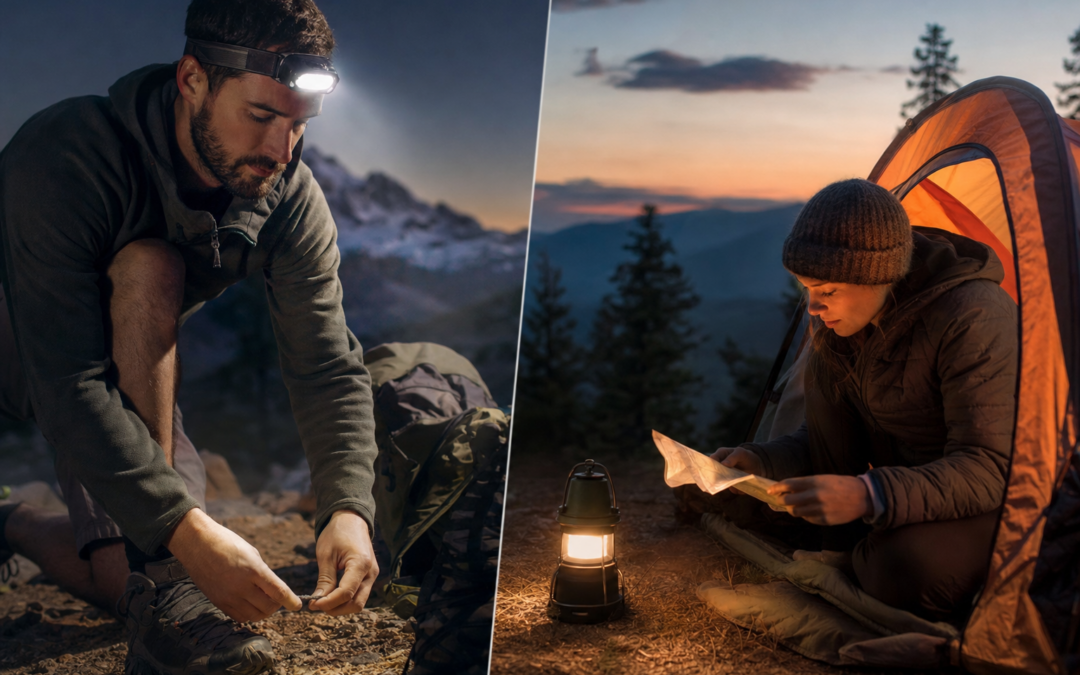
When packing for your next camping trip, choosing the right lighting can make a big difference in your comfort, safety, and convenience at the campsite. Two of the most popular options are headlamps and lanterns, each with their own strengths and best-use scenarios. But which should you bring for tent life, nighttime cooking, or navigating the trail after dark? In this guide, we’ll break down headlamps vs lanterns, offer practical advice for assembling your camping light kit, and help you decide what fits your style of outdoor adventure.
Whether you’re a solo backpacker or planning a family campout, the right lighting setup can reduce stress and improve your overall experience. We’ll cover the pros and cons, compare real-life use cases, and point you toward more outdoor gear advice and reviews to round out your packing list.
Understanding Headlamps: Hands-Free Lighting for Every Camper
Headlamps are a staple in most camping kits for a good reason: they provide focused, hands-free illumination wherever you look. Modern headlamps are lightweight, compact, and often feature adjustable brightness modes, making them ideal for everything from pitching tents at dusk to reading in your sleeping bag. Their beam can be aimed precisely, which is invaluable when you’re cooking, sorting gear, or navigating rough trails.
- Key benefits: Keeps both hands free, directional beam, efficient for tasks and movement.
- Drawbacks: Not as effective for illuminating a large area, can be uncomfortable if worn for long periods.
- Best uses: Hiking, backpacking, tent setup, camp chores, emergencies.
If you often find yourself moving around camp at night or need reliable lighting for trails, a quality headlamp should be at the top of your list.
Lanterns: Area Lighting for Campsites and Tents
Lanterns provide ambient, 360-degree illumination, making them perfect for lighting up your tent or campsite. They’re great for group activities, cooking, or simply hanging out after sunset. Lanterns come in a wide range of sizes and power options, from compact and battery-powered to larger models with rechargeable or even solar features.
- Key benefits: Illuminates a wide area, great for groups, creates a cozy camp atmosphere.
- Drawbacks: Bulky compared to headlamps, less effective for movement or task lighting.
- Best uses: Tent interiors, picnic tables, group campsites, family camping.
For stationary use and group comfort, a lantern is hard to beat. Consider your space and group size when selecting the right model.
Headlamps vs Lanterns: Core Differences at a Glance
To help you quickly compare, here’s a side-by-side look at the most important differences between headlamps and lanterns:
- Beam Direction: Headlamps are directional; lanterns are omnidirectional.
- Hands-Free Use: Headlamps shine where you look; lanterns light up a space but require placement.
- Portability: Headlamps are ultra-compact; lanterns range from pocket-sized to bulky.
- Battery Life: Headlamps can be more efficient for single-person use; lanterns may consume more power for area lighting.
- Comfort: Headlamps can cause “hot spots” on the forehead if worn too long; lanterns avoid this but aren’t wearable.
Most campers find that a combination of both types covers all scenarios, but your needs may vary based on your camping style.
When to Choose a Headlamp
Headlamps truly shine for activities that require mobility, precision, or both hands free. Here are some situations where a headlamp is the clear winner:
- Night hiking or bathroom trips: You need to see where you’re going, follow a trail, or spot obstacles.
- Setting up camp after dark: Hands-free lighting makes pitching tents or organizing gear much easier.
- Cooking or cleaning up: Focused light is helpful for prepping food, washing dishes, or sorting supplies.
- Emergency preparedness: In case of sudden weather or power outages, headlamps are easy to grab and use.
Choose a model with multiple brightness levels, a comfortable strap, and weather resistance for the best experience.
When a Lantern Is Best
Lanterns are essential for creating a welcoming, well-lit space at camp. Here’s when you’ll appreciate having one:
- Lighting up your tent: A lantern hung from the ceiling or placed in a corner provides general illumination for reading, changing, or playing games.
- Camp kitchen and dining: Set a lantern on the picnic table for group meals or evening card games.
- Family or group camping: Lanterns help everyone see and move around safely inside larger tents or around camp.
- Relaxed atmosphere: Some lanterns have warm light or dimming features to create a cozy mood after dark.
If you’re camping with kids, a lantern can also serve as a nightlight, helping little campers feel more secure after sunset.
Building a Balanced Camping Light Kit
The best camping light kit is often a mix of both headlamps and lanterns. Here’s how to decide what to pack for your next trip, whether you’re backpacking solo or car camping with family:
- Solo backpackers: A lightweight headlamp usually covers all needs, but a tiny collapsible lantern can be worth the space for tent comfort.
- Couples or small groups: One headlamp per person plus a compact lantern for the tent or communal area is a practical combo.
- Family camping: Bring a headlamp for each adult or older child, and at least one lantern for the tent and one for the picnic table or kitchen area.
- Backup options: Always pack extra batteries or a rechargeable power bank. Consider a backup mini light for emergencies.
Think about how you’ll use each light, the size of your group, and your trip’s duration. Overpacking lights adds weight and clutter, but underpacking can leave you in the dark when it matters most.

BISINNA 2/4 Person Camping Tent Lightweight Waterproof Backpacking Tent Review — An editorial look at this BISINNA option for tents — specs first, marketing second. Key figures include 7001 , 2, 3 .
Battery Types and Power Considerations
Modern headlamps and lanterns use various battery types, each with trade-offs:
- Disposable batteries (AA, AAA): Widely available, easy to replace, but less eco-friendly and can add weight for longer trips.
- Rechargeable (USB or built-in): Convenient for regular use, better for the environment, but require a charging source (portable power bank, solar panel) in the field.
- Solar-powered: Good backup for lanterns, though charging depends on sunny weather and can be slow.
For multi-day trips, consider your access to charging and always bring spares. Headlamps usually last longer on a set of batteries than lanterns, especially at lower brightness levels.
Lighting Modes and Special Features
Both headlamps and lanterns come with a variety of lighting modes and features. Here’s what to look for:
- Brightness: Measured in lumens; 100-200 lumens is adequate for most headlamp tasks, while lanterns may go higher for area lighting.
- Adjustable beam: Some headlamps let you switch between spot (focused) and flood (wide) beams.
- Red light mode: Preserves night vision and is less likely to wake others in the tent.
- Dimming: Lets you set the brightness to suit your needs and extend battery life.
- Water resistance: Look for an IPX rating if you camp in wet conditions.
- Rechargeable or hybrid power: Some lights work with both disposable and rechargeable batteries.
Consider which features match your camping style. For example, a red light mode is great for stargazing or checking maps at night without disturbing tentmates.
Headlamps and Lanterns in Tent Life
Inside the tent, lanterns excel at providing soft, even light for group activities or winding down at bedtime. Hang your lantern from the tent’s gear loop or set it in a corner for best results. Headlamps still play a role—use one for reading in your sleeping bag or finding something in your duffel without waking others.
Safety tip: Avoid powerful headlamp beams pointed directly at tentmates’ faces to prevent dazzling them. Likewise, don’t leave lanterns running all night unless needed—a dim setting is usually sufficient for comfort and safety.

Night Cat 2-Persons Backpacking Tent: Waterproof Lightweight Camping Tent Review — Practical tents from Night Cat, summarized from hub features and listed measurements. Key figures include 2 , 3 minutes, 6.8 .
On the Trail: Headlamps Take the Lead
For hiking, walking to the restroom, or night navigation, nothing beats a good headlamp. The ability to direct light exactly where you need it—whether scanning for trail markers or watching your step—makes headlamps a must for any after-dark movement.
Choose a model with a comfortable, adjustable strap and a beam that can switch between wide and focused. For group hikes, remind everyone to angle headlamps slightly downward to avoid blinding others. Keep spare batteries handy, especially on longer hikes or multi-day treks.
Camp Kitchens and Shared Spaces: Lanterns Win
When it’s time to prep dinner or gather around the picnic table, lanterns come into their own. Set up your lantern at the center of the activity for even, shadow-free light. For large groups or wide spaces, consider two lanterns—one for cooking, another for eating or games.
Some lanterns have hooks or magnets for easy hanging from a canopy or tent structure. For added versatility, look for models that double as a flashlight or have USB ports for charging devices. If you’re concerned about bugs, choose a lantern with a warm light setting, which is less likely to attract insects.

4 Person Instant Tents for Camping Setup in 50s Review — Practical tents from Purebox, summarized from hub features and listed measurements. Key figures include 50, 4 , 8.04 .
Practical Packing: Tips for Light Management
Efficient packing can save space and reduce hassles at camp. Here are some practical tips for managing your lighting gear:
- Store headlamps in an easily accessible pocket: You’ll want to grab it quickly if you arrive at camp after dark.
- Use a stuff sack or small box for lanterns: Protects the globe and keeps everything organized.
- Keep spare batteries together: Use a zip-top bag or small case to avoid losing them in your pack.
- Pre-check battery levels: Test all lights before leaving home to avoid surprises in the field.
- Consider weight and size: If backpacking, opt for the lightest and most compact models that meet your needs.
Remember to pack out dead batteries and avoid leaving lanterns running when not needed to maximize battery life.
Common Myths About Headlamps and Lanterns
Let’s clear up a few common misconceptions:
- “One light is enough for everyone.” In reality, each person should have their own headlamp or small flashlight for emergencies or personal tasks.
- “Lanterns are obsolete with modern headlamps.” Lanterns still excel at group area lighting and creating a comfortable space.
- “More lumens always means better.” Super-bright lights drain batteries quickly and can be uncomfortably harsh in close quarters. Match brightness to your use case.
- “Rechargeable is always best.” Rechargeables are convenient, but disposable batteries can be a lifesaver on longer, off-grid trips without charging options.
Choose lighting based on your real needs, not just marketing claims or gear trends.

6 Person Tents for Camping Waterproof Family Cabin Tent with Full Rainfly Review — Purebox tents gear aimed at buyers who want clear specs before they click through. Key figures include 6, 6 , 360.
Choosing the Right Lighting for Your Tent Size and Group
The best lighting setup depends on the size of your tent and the number of campers:
- Small tents (1-2 person): A single headlamp or compact lantern is usually sufficient. Headlamps double as reading lights.
- Medium tents (3-4 person): One lantern for general lighting, plus individual headlamps for each camper.
- Large family tents (5+ person): Two lanterns—one near the door, one in the center—plus headlamps or flashlights for each person.
For group comfort, prioritize lanterns with adjustable brightness. In shared spaces, consider lights with a red or low mode to avoid disturbing others at night.
Care and Maintenance: Getting the Most from Your Lights
Extend the life of your lighting gear with these simple care tips:
- Remove batteries for long-term storage: Prevents leakage and corrosion.
- Keep lights clean and dry: Wipe off dirt and moisture after use, especially after rainy trips.
- Check seals and gaskets: Ensure water resistance remains effective, especially for headlamps used in wet weather.
- Replace worn headbands: Many headlamps offer replacement straps for improved comfort.
Regularly inspect your gear before each trip to avoid surprises and ensure reliable performance in the field.
Conclusion: Building Your Ideal Camping Light Kit
For most campers, a balanced light kit includes both headlamps and lanterns. Headlamps are your go-to for movement and tasks, while lanterns create a comfortable, well-lit environment for group activities and tent life. Carefully consider your group size, trip duration, and campsite setup when choosing the right mix for your adventures.
With a little planning, you’ll avoid common lighting pitfalls and enjoy safer, more comfortable nights outdoors. For more tips on assembling the perfect camp setup, including tent choices and gear reviews, check out our hub on outdoor gear.
Essential Camping Lighting Checklist
Before you head out on your next camping trip, use this checklist to ensure you have the right lighting gear and accessories for a safe and comfortable experience:
- Primary headlamp: Reliable, fully charged or with fresh batteries.
- Backup headlamp or flashlight: In case your primary fails or for lending to a friend.
- Lantern: Suitable size and brightness for your group and campsite setup.
- Extra batteries or power banks: For both headlamps and lanterns, especially on multi-night trips.
- Charging cables: For rechargeable lighting devices.
- Mounting accessories: Hooks, carabiners, or straps for hanging lanterns in tents or on branches.
- Diffusers or covers: To soften harsh light or adapt your lantern for reading or ambiance.
- Glow sticks or emergency lights: For marking tent lines or emergency signaling.
- Waterproof storage bag: To keep electronics dry in wet conditions.
Customize this checklist based on your group size, trip duration, and expected weather conditions for best results.
Common Mistakes When Using Camping Lights
Even experienced campers can make simple mistakes with their lighting setup. Here are some frequent errors to avoid:
- Relying on a single light source: Batteries can die or devices can malfunction. Always bring a backup.
- Forgetting extra batteries or charging equipment: Running out of power can leave you in the dark at the worst moment.
- Using high brightness unnecessarily: This drains batteries quickly and can disturb wildlife or fellow campers.
- Blinding others with headlamps: Be mindful where you point your light, especially around campmates.
- Not checking weather resistance: Some lights aren’t waterproof or dustproof. Check ratings and pack accordingly.
- Improper lantern placement: Placing lanterns too close to tent walls can cause overheating or fire risk with gas models.
- Ignoring light pollution: Excessive lighting can spoil the night sky for stargazers and affect campsite ambiance.
A little planning and awareness can help you avoid these pitfalls and ensure everyone enjoys a safe and pleasant night outdoors.
Maintenance Tips for Headlamps and Lanterns
Proper maintenance extends the lifespan of your camping lights and keeps them working reliably trip after trip. Follow these tips for both headlamps and lanterns:
- Clean regularly: Wipe down with a damp cloth to remove dirt, sweat, or food residue. Avoid getting water inside battery compartments.
- Check battery contacts: Inspect for corrosion or buildup. Clean contacts gently with a pencil eraser if needed.
- Store batteries separately: Remove batteries during long-term storage to prevent leaks or drain.
- Inspect straps and seals: For headlamps, check the headband for wear. For lanterns, ensure seals and O-rings are intact for water resistance.
- Test before every trip: Turn on each light at home to ensure it works and holds charge.
- Follow manufacturer instructions: Each model may have unique care requirements, especially for rechargeable units.
Routine care not only prevents mid-trip failures but also keeps your gear ready for emergencies.
Frequently Asked Questions About Camping Lights
Do I need both a headlamp and a lantern?
While it’s possible to get by with just one type, most campers find that having both provides the greatest flexibility. Headlamps excel for movement and tasks, while lanterns make group activities and tent living much more comfortable. For minimalists, a headlamp plus a compact lantern is a smart compromise.
Are rechargeable lights better than battery-powered models?
Rechargeable lights are convenient and environmentally friendly, but they require access to power for recharging. Battery-powered models are often lighter and easier to use off-grid, especially on longer trips. Many campers carry both types to cover all scenarios.
How bright should my camping light be?
Brightness is measured in lumens. For headlamps, 100–300 lumens is plenty for most tasks; for lanterns, 100–500 lumens covers tent and campsite lighting. Adjustable brightness settings are ideal, allowing you to save battery life and avoid excessive glare.
What’s the best way to hang a lantern in my tent?
Most tents have a gear loop or hook at the ceiling. Use the built-in handle, a carabiner, or a short strap to secure your lantern. Make sure the lantern is stable and not touching the tent fabric, especially with gas or candle models. For soft, even light, consider hanging it at head height in the center of the tent.
How can I reduce bugs attracted to my camping lights?
Bugs are attracted to bright white and blue-toned lights. Choose lanterns or headlamps with warm or red-light modes, and keep lighting minimal when not needed. Avoid leaving lights on near open tent doors and use mesh screens where possible.
Can I use my phone as a camping light?
Phones can provide emergency lighting, but relying on them as your main source isn’t recommended. Phone batteries drain quickly, especially in cold weather, and you don’t want to risk losing communication capabilities. Always bring dedicated camping lights.