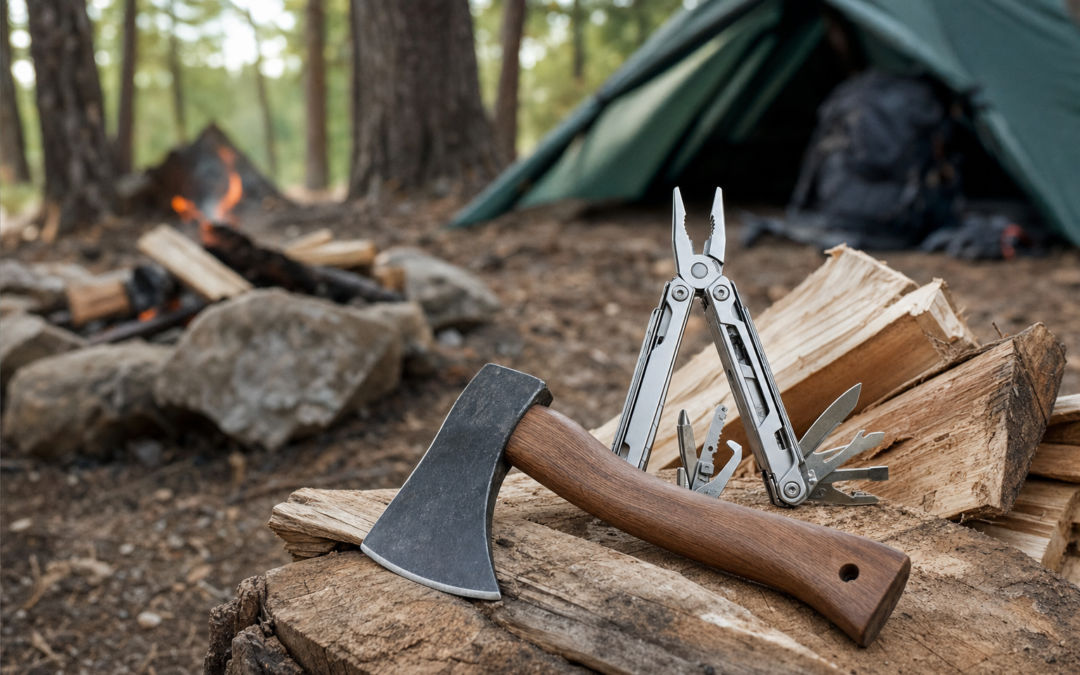
When you’re heading out on a camping trip, two of the most useful tools you can pack are a multitool and a hatchet. These compact, versatile items can handle a surprising range of camp chores, from splitting kindling to repairing gear. Choosing the right multitool and hatchet, and knowing how to use them safely, can make your time outdoors easier and more enjoyable.
Whether you’re a seasoned camper or new to outdoor adventures, understanding the basics of these tools is essential. This guide covers what to look for in camping multitools and hatchets, how to use them for common tasks, and practical safety tips for every skill level.
For even more outdoor gear advice and product recommendations, check out our outdoor gear hub for the latest expert guidance.
Why Multitools and Hatchets Belong in Every Camper’s Kit
Multitools and hatchets are two of the most important pieces of equipment you can bring to camp. A multitool packs several functions—like pliers, knife blades, screwdrivers, saws, and more—into a single compact device. A hatchet, on the other hand, offers the ability to chop wood, drive tent stakes, and handle heavier-duty tasks that a multitool can’t manage.
These tools save space and weight in your pack, replace several single-purpose items, and help you adapt to unexpected situations. For example, you might need to tighten a loose bolt on your camp stove with your multitool, or split firewood with your hatchet after a rainstorm. Having both on hand is a smart move for anyone who values preparedness and efficiency.
Types of Multitools for Camping
Camping multitools come in a variety of shapes and sizes, each catering to different needs. The classic “pliers-based” multitool is the most popular, offering a set of folding pliers with knife blades, screwdrivers, scissors, and saws tucked into the handles. Some multitools are designed with camping-specific features, such as mini axes, fire starters, or can openers.
When choosing a multitool for camping, consider:
- Number and type of functions: Do you need pliers, scissors, or a saw? More isn’t always better—focus on tools you’ll actually use.
- Size and weight: A compact multitool is easier to carry, but make sure it’s not so small that it sacrifices usability.
- Build quality: Look for stainless steel construction and sturdy locking mechanisms.
- Ease of use: Tools should open smoothly and lock securely in place.

16 in 1 Multitool Camping Survival Gear with Axe Saw Pliers Whistle Hammer Review — A GIRIAITUS pick in Multitools that focuses on real-world usability Key figures include 16 in, 1 , 4 .
Choosing the Right Hatchet for Camp Chores
Hatchets are small, single-handed axes designed for portability and camp use. Unlike full-size axes, they’re easy to pack and handle but still powerful enough for splitting kindling, shaping stakes, or clearing brush.
Key features to consider in a camping hatchet:
- Weight and length: Lighter hatchets (1-2 pounds, 10-16 inches long) are easier to carry, but heavier models are more effective for chopping.
- Blade design: A broad, slightly curved blade is best for general camp chores. Some hatchets have hammerheads or flat backs for pounding stakes.
- Handle material: Wood, fiberglass, and metal handles each offer different balances of durability, shock absorption, and weight.
- Sheath: A good sheath protects both you and the blade during transport.
Some multitools even incorporate a mini hatchet or axe head, offering a hybrid solution for ultralight campers.

17 in 1 Multitool Knife Fire Starting Stick Bottle Opener Saw for Camping Review — Practical multitools from GIRIAITUS, summarized from hub features and listed measurements. Key figures include 17 , 1.5, 420 .
Essential Camp Chores for Multitools and Hatchets
Once you’re at camp, multitools and hatchets prove their worth in dozens of ways. Here are some of the most common chores these tools handle:
- Fire prep: Use your hatchet to split kindling and your multitool’s saw or knife to shave tinder.
- Tent setup: Drive tent stakes with the back of your hatchet or a multitool hammer head; cut guy lines to length.
- Food prep: Open cans, slice cheese and salami, and open bottles with multitool blades and openers.
- Repair tasks: Tighten stove fittings, fix lanterns, or patch gear with screwdrivers and pliers.
- Clearing brush: A hatchet can trim branches that encroach on your campsite.
- Making tools: Carve tent stakes, feather sticks, or spatulas with your hatchet or multitool blade.
The more familiar you are with your tools, the more creative you can get. Always practice using your multitool and hatchet at home before heading into the field.
Safety First: Using Multitools at Camp
Multitools pack a lot of sharp and pointy functions into a small package. To use yours safely:
- Open one tool at a time. Opening multiple blades or tools at once can make the multitool unstable and dangerous.
- Lock blades securely. Always check the locking mechanism before applying pressure.
- Cut away from your body. Whether slicing, sawing, or whittling, always direct the blade away from yourself and others.
- Keep tools clean and dry. Dirt and moisture can dull blades and corrode moving parts.
- Store safely. When not in use, keep your multitool folded and in its sheath or pouch.
Supervise children around multitools, and never leave open blades or tools unattended at camp.
Hatchet Safety: Chopping, Splitting, and Storing
Hatchets demand respect, as even a small one can cause serious injury if misused. Follow these guidelines:
- Choose a safe work area. Always chop or split wood on a stable surface, well away from tents, people, and pets.
- Wear gloves and sturdy shoes. This helps protect your hands and feet from accidental slips.
- Check your grip. Hold the handle firmly with both hands (if possible) and keep your hands clear of the blade’s path.
- Use controlled swings. Don’t use excessive force; let the weight of the hatchet do the work.
- Keep the blade sharp. Dull blades are more likely to glance off wood and cause injury.
- Store safely. Always sheath your hatchet when not in use and keep it out of reach of children.
Regularly inspect your hatchet for cracks, loose heads, or damaged handles, and repair or replace as needed.
Maintaining Your Camping Multitool and Hatchet
Proper care extends the life and usefulness of your tools. After each trip:
- Clean thoroughly. Wipe down all surfaces and remove sap, dirt, and moisture.
- Dry completely. Prevent rust by drying metal parts before storage.
- Oil moving parts. A light application of oil keeps hinges and joints smooth on multitools and prevents corrosion on hatchet blades.
- Sharpen regularly. Use a sharpening stone or file to keep blades keen. Sharp tools are safer and more effective.
- Inspect for damage. Check for loose screws, cracked handles, or worn sheaths each time you pack up.
Store your tools in a dry place, preferably in their sheaths or cases, to keep them ready for your next adventure.

Amazon Basics 4-Person Camping Tent with Quick Setup Review — Practical tents from Amazon Basics, summarized from hub features and listed measurements. Key figures include 6 minutes, 9070, 4 .
Multitool and Hatchet Features Worth Considering
The best multitool or hatchet isn’t always the one with the most features—it’s the one that fits your camping style. Here are some features to look for:
- One-handed operation: Some multitools allow you to open blades or pliers with one hand, which is helpful when you’re multitasking.
- Replaceable components: On premium multitools, you can sometimes replace wire cutters or saw blades.
- Fire-starting tools: Some multitool kits include ferro rods or magnesium fire starters built in.
- Integrated mini-axes: A few multitools double as a hatchet or hammer for ultralight trips.
- Hammerhead or flat back: On hatchets, a hammer surface is useful for pounding tent stakes or nails.
- Non-slip grip: Textured or rubberized handles provide better control in wet conditions.
- Belt clips and lanyard holes: These make carrying and securing your tools easier.
Consider your most common camp tasks and choose features that match your needs. It’s better to have a few reliable tools than a bulky multitool loaded with gadgets you’ll never use.
How to Pack and Carry Tools Safely
Transporting sharp tools requires care to prevent accidents and protect your equipment. Here are some tips for packing multitools and hatchets:
- Use sheaths and cases. Always store tools in their designated covers to prevent accidental cuts and blade damage.
- Pack in accessible locations. Keep your multitool or hatchet where you can reach it quickly—like in a hip pocket, belt holster, or the top pocket of your backpack.
- Secure tools during transport. Don’t toss tools loosely into your pack, where they might shift or cause injury.
- Follow regulations. Some parks and public lands have restrictions on carrying axes or knives—check local rules before you go.
If you’re car camping, keep tools out of reach of children and store them with other camp essentials for quick access on arrival.
Multitool and Hatchet Alternatives: When to Choose Something Else
While multitools and hatchets cover most basic camp chores, there are situations where a specialized tool might be better:
- Saws: For cutting larger branches or logs, a folding camp saw is safer and more effective than a multitool saw blade.
- Full-size axe: If you’re splitting large amounts of firewood, a full-size axe is more efficient than a hatchet.
- Fixed-blade knife: For food prep or bushcraft, a dedicated camp knife offers better control and comfort than most multitool blades.
- Camp mallet: For driving tent stakes in rocky ground, a rubber mallet is safer and easier than the back of a hatchet.
Assess your trip’s needs and the number of people in your group. For most solo or family camping trips, a good multitool and a reliable hatchet will handle just about everything.

Amazon Basics Waterproof Multipurpose Camping Tarp Review — Amazon Basics tent tarps gear aimed at buyers who want clear specs before they click through. Key figures include 7.5 Feet, 96 , 1.49969 pounds.
Tips for Teaching Kids Safe Tool Use at Camp
Introducing young campers to multitools and hatchets can be rewarding, teaching both responsibility and practical skills. If your kids are ready to learn:
- Start with supervision. Always watch closely and demonstrate proper technique.
- Teach respect, not fear. Explain why tools are useful and how to use them safely.
- Begin with simple tasks. Let kids use multitools to open food packages or cut string before moving on to splitting kindling with a hatchet.
- Emphasize safety gear. Make gloves, closed-toe shoes, and eye protection standard for any chopping or cutting tasks.
- Set clear boundaries. Create a “tool-use area” and teach kids to keep blades pointed away from themselves and others.
- Store tools safely. Model safe storage habits, such as sheathing tools and keeping them out of reach when not in use.
With patience and the right guidance, kids will gain confidence and respect for their camp tools—a skill set that will serve them on every future adventure.
Final Thoughts: Making the Most of Your Multitool and Hatchet
Investing in a quality multitool and hatchet is one of the smartest moves you can make for camping. These tools are the backbone of your camp kit, ready for everything from everyday chores to unexpected repairs. Choose models that fit your needs, maintain them well, and always prioritize safety—your camping experience will be smoother, safer, and more enjoyable.
Before your next trip, spend a little time practicing with your tools at home. Familiarity and confidence make all the difference when you’re out in the wild. And don’t forget to review our outdoor gear hub for more tips and trusted product picks to round out your camping checklist.
Essential Camp Chores Checklist: When to Use a Multitool vs. Hatchet
Knowing which tool to reach for can save time and effort at camp. Use this checklist to match common chores with the right tool:
- Splitting kindling and firewood: Hatchet — Best for chopping and splitting small logs or branches for your campfire.
- Shaving tinder or feather sticks: Hatchet or multitool knife blade — A sharp hatchet excels at shaving wood, but a sturdy knife on your multitool is also effective for finer work.
- Cutting rope or cordage: Multitool — The knife or scissors attachment makes clean, safe cuts.
- Opening cans and bottles: Multitool — Look for a can opener and bottle opener feature.
- Repairing gear (tightening screws, fixing tent poles, etc.): Multitool — Pliers, screwdrivers, and file attachments are invaluable for quick fixes.
- Driving tent stakes: Hatchet (hammer side) — Use the flat poll or hammerhead of your hatchet to pound stakes securely.
- Clearing brush or small branches: Hatchet — The blade makes quick work of clearing your campsite perimeter.
- Preparing food (slicing, peeling): Multitool — The knife blade can handle most food prep tasks.
Tip: Always use the right tool for the job to prevent injury and avoid damaging your gear.
Common Mistakes to Avoid with Multitools and Hatchets
Even experienced campers can make mistakes with their tools. Here are some pitfalls to watch out for:
- Using a multitool for heavy chopping: Multitools are not designed for chopping wood or splitting logs. This can damage the tool and put you at risk of injury.
- Ignoring blade sharpness: Dull hatchets and knife blades require more force, making slips and accidents more likely. Regularly check and sharpen your blades.
- Overpacking tools: Bringing too many single-purpose tools can weigh you down. Choose a multitool and hatchet that cover your essential needs.
- Improper grip and stance: When using a hatchet, always maintain a firm grip and stable footing. Swinging carelessly or from an awkward position increases accident risk.
- Failing to lock tools open: Make sure all blades and attachments on your multitool are fully locked before use to prevent them from folding unexpectedly.
- Neglecting tool maintenance: Dirt, moisture, and sap can quickly degrade performance if not cleaned off after each trip.
- Storing tools unsafely: Always sheath your hatchet and fold away multitool blades when not in use to protect yourself and your gear.
Avoiding these mistakes keeps your tools in good condition and minimizes the chance of accidents at camp.
Multitool and Hatchet Maintenance Tips
Proper maintenance extends the life and reliability of your multitool and hatchet. Follow these steps before, during, and after your camping trip:
- Clean after use: Wipe down blades and moving parts with a dry cloth. For sticky residue, use a little rubbing alcohol or mild soap and water, then dry thoroughly.
- Sharpen blades regularly: Use a sharpening stone, file, or portable sharpener to keep hatchet and multitool blades in top shape. A sharp blade is safer and more effective.
- Lubricate joints: For multitools, apply a drop of light oil to the pivot points to keep tools opening and closing smoothly.
- Inspect for damage: Check for cracks in handles, loose heads, or bent tools before each trip. Address any issues to avoid failure in the field.
- Store properly: Keep your tools dry and protected in a sheath or case. If storing for a long period, consider a light coat of oil on metal surfaces to prevent rust.
- Sheath safety: Always use the provided sheath for your hatchet and ensure all multitool blades are folded in before packing away.
Regular maintenance not only improves performance, it also ensures your tools are ready for any chore that comes your way.
Frequently Asked Questions About Camping Multitools and Hatchets
How do I choose between a multitool and a fixed-blade knife?
Multitools offer versatility, combining several tools into one compact package, which is ideal for campers who want to save space and weight. However, a dedicated fixed-blade knife is often more robust for heavy-duty cutting and food prep. Many campers bring both: a multitool for quick fixes and a knife for tasks requiring a stronger blade.
What’s the best way to sharpen a hatchet at camp?
Use a portable sharpening stone or file. Hold the hatchet securely and run the stone along the edge at the original bevel angle, working from heel to tip. Repeat on both sides until sharp, then finish with a few light strokes to hone the edge. Some multitools come with a small sharpening rod for field use.
Can I take my multitool or hatchet on a plane?
No, you should never pack sharp tools like multitools with blades or hatchets in your carry-on luggage. They must be packed in checked baggage if you’re flying to your camping destination. Always check current airline and TSA rules before you travel.
How do I know when to replace my multitool or hatchet?
Replace your tools if you notice significant rust, cracks, loose handles or heads, or if the locking mechanisms no longer function properly. It’s better to invest in a new, reliable tool than risk failure during a critical camp chore.
Are multitool axe heads effective for real chopping?
Multitools with mini axe heads can handle very light chopping tasks in a pinch, like splitting tinder or small branches, but they’re not a substitute for a full-sized hatchet. For anything more than the lightest camp chores, a dedicated hatchet is safer and more effective.
What safety gear should I use when handling a hatchet?
Wear sturdy gloves to improve grip and protect your hands. Eye protection is a good idea when splitting wood or clearing brush, especially if there’s a risk of flying debris. Always make sure your work area is clear of bystanders and obstacles.
Quick-Reference: Multitool & Hatchet Safety Reminders
- Always cut away from your body and keep hands clear of the cutting path.
- Use a stable surface for chopping or sawing.
- Double-check that all multitool implements are locked before use.
- Keep tools sheathed or folded when not in use.
- Never use a damaged or loose tool in the field.
Staying mindful of these safety basics will help you get the most from your multitool and hatchet—safely and efficiently—on every camping adventure.