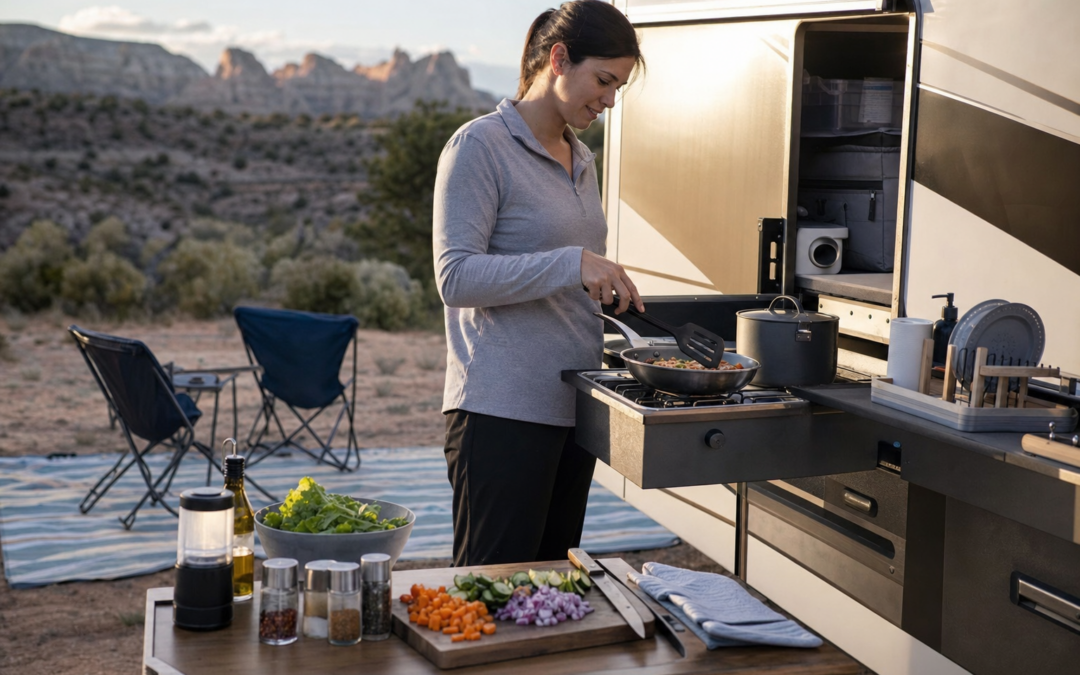
Getting your camp kitchen right can make or break your RV trip. Whether you’re parked at a full-hookup site or boondocking off-grid, having the right stoves, utensils, and cleanup gear takes the stress out of mealtime and lets you focus on enjoying the outdoors. With so many gadgets and products on the market, it’s easy to feel overwhelmed. That’s why we’ve broken down the true essentials you’ll need for a functional, convenient camp kitchen setup in your RV.
In this guide, you’ll learn how to choose the right camp stove, what utensils and cookware to bring, and practical tips for staying organized and handling cleanup efficiently. We’ll cover options for every style of RV camping, from quick overnight stops to extended stays. If you want a broader look at gear for your rig, check out our camper gear recommendations for more ideas. Let’s get cooking!
Choosing the Right Camp Stove for Your RV Kitchen
The heart of any camp kitchen is your cooking setup. In an RV, you might have a built-in stove, but many campers prefer a portable camp stove for flexibility—especially for outdoor cooking to keep smells and heat outside. Here’s what to consider:
- Fuel Type: Propane stoves are most common for RVers thanks to easy refueling and reliable performance. Butane and dual-fuel options are available, too. Make sure your stove’s fuel matches what you can store and transport safely.
- Burner Count: Single-burner stoves are ultra-portable and great for solo or minimalist trips. Two-burner models allow you to cook multiple dishes at once, which is handy for families or groups.
- Wind Protection: Look for stoves with built-in wind screens or shields. Even a light breeze can seriously affect cooking times outdoors.
- Size and Storage: Consider how much space you have in your RV or tow vehicle. Some stoves fold up compactly for storage, while others may require a dedicated spot in your camp kitchen organizer.
- Extra Features: Piezo igniters for matchless lighting, simmer controls, and removable grates for cleaning all add to convenience.
For most RVers, a two-burner propane stove hits the sweet spot for size and versatility. If you love grilling, consider a portable grill or combo unit.
Essential Cookware and Utensils for the Camp Kitchen
Once you’ve settled on a stove, you’ll need the right cookware and utensils to match. Space is at a premium in any RV, so focus on multipurpose items and durable materials that stand up to camp use.

GAIALOOP Camping Cooking Utensils Set Camp Kitchen Cookware Kit with Review — Practical cooking utensils from Gaialoop, summarized from hub features and listed measurements. Key figures include 16 PCS, 004, 16PCS.
Here’s a checklist of must-have items for your camp kitchen:
- Pots and Pans: A medium-sized pot, a skillet, and a small saucepan cover most camp cooking needs. Look for nesting sets or options with removable handles for easier storage.
- Cooking Utensils: Don’t forget a spatula, serving spoon, tongs, and a ladle. Silicone or nylon tools won’t scratch nonstick surfaces and are easy to clean.
- Cutting Board and Knife: A sturdy, compact cutting board and a sharp chef’s knife (with blade cover) are camp kitchen workhorses.
- Mixing Bowl: Collapsible bowls save space and can double as serving or salad bowls.
- Measuring Cups/Spoons: Especially useful if you enjoy baking or following recipes while camping.
- Can Opener and Bottle Opener: Easy to forget, but you’ll miss them if you need them!
Many RVers prefer to keep a dedicated set of cooking gear just for camping. This cuts down on packing time and ensures you’re never missing a key tool at the campsite.
Camp Kitchen Organization: Keeping Gear Accessible
Organization is the difference between a smooth camp cooking experience and a stressful one. The best setups keep all your kitchen essentials handy and protected from the elements. Consider using a dedicated camp kitchen organizer or storage tote for your gear.

HODRANT Large Tactical Camping Kitchen Organizer for BBQ Cooking Essentials Review — An editorial look at this HODRANT option for camp kitchen — specs first, marketing second. Key figures include 3 , 2 , 12.9921 .
Here are some organization strategies:
- Roll-up utensil bags keep your cooking tools sorted and prevent rattling during travel.
- Stacking bins or crates separate cookware, food, and cleaning supplies for easier access.
- Clear containers make it easy to see what you have at a glance and keep small items from getting lost.
- Hanging organizers (with hooks or loops) can be attached to an awning or a table for outdoor kitchens, keeping frequently used items within reach.
Label your containers and do a quick inventory after each trip to restock any essentials you’ve used up.
Food Storage and Safe Handling on the Road
Food storage in an RV camp kitchen is all about maximizing freshness and minimizing waste. Spoiled food can be a health hazard, and nobody wants to attract wildlife with an unsecured cooler or pantry.
- Coolers and Fridges: If your RV has a built-in fridge, use it for perishables. For extra capacity, bring a high-quality cooler with ice packs or dry ice. Hard-sided coolers tend to insulate better and are more bear-resistant than soft-sided models.
- Packing Strategy: Store raw meats in leakproof containers on the bottom shelf, and keep produce and ready-to-eat foods above. This prevents cross-contamination.
- Dry Storage: Use airtight bins or food-grade buckets to keep dry goods organized and protected from moisture and pests.
- Spices and Condiments: Small containers or travel-size bottles save space and reduce waste. Consider pre-mixing spice blends for favorite camp recipes.
Always follow campground rules for food storage, especially in bear country. Proper storage keeps you, your neighbors, and wildlife safe.
Setting Up a Functional Outdoor Camp Kitchen
Cooking outside your RV is a great way to enjoy the fresh air, keep odors out of your rig, and create a more social mealtime environment. Even if your RV has an indoor kitchen, setting up a basic outdoor cooking area is worth the effort—especially in nice weather.
- Table or Cooking Surface: A folding camp table or picnic table gives you a safe, flat spot to prep and cook. Some RVs have outdoor kitchens built in, but a portable table works just as well.
- Wind and Weather Protection: Use a pop-up canopy, awning, or windscreen to shield your cooking area from the elements.
- Lighting: Headlamps, lanterns, or string lights make evening cooking safer and more enjoyable.
- Heat-Resistant Mats: Place these under stoves or grills to protect tables and reduce fire risk.
Designate a dishwashing and trash area nearby for streamlined cleanup. Keep a small bin or bag handy for food scraps and packaging to prevent littering.
Grilling and Campfire Cooking: Expanding Your Options
For many RVers, grilling is a highlight of camp life. Portable grills and fire pits let you cook over an open flame, adding flavor and adventure to your meals. Here’s how to make the most of these options:

CAMPINGMOON Portable Campfire BBQ Grill 14 Inch Stainless Steel Folding Review — A camping moon pick in Camp Kitchen that focuses on real-world usability Key figures include 3, 4 , 13.8.
- Portable Grills: Compact propane or charcoal grills are easy to pack and set up. Look for models with folding legs and removable grates for easy cleaning.
- Campfire Cooking: If allowed at your campground, a campfire can be used for grilling, roasting, or Dutch oven cooking. Always check fire restrictions before lighting up.
- Grill Tools: Long-handled tongs, a grill brush, and a meat thermometer are must-haves for safe, efficient grilling.
- Fire Safety: Keep a bucket of water or fire extinguisher nearby, and never leave a fire unattended.
Experiment with foil packet meals, kabobs, or fresh-caught fish for memorable campfire dinners.
Water Management and Dish Cleanup
Cleaning up after a meal is nobody’s favorite part of camping, but it’s essential for hygiene and keeping your campsite tidy. RVers have the advantage of built-in sinks, but many prefer to set up an outdoor dishwashing station to avoid filling the gray tank too quickly.
- Collapsible Sinks or Basins: Bring two—one for washing, one for rinsing. These fold flat for storage and make cleanup fast.
- Biodegradable Soap: Use eco-friendly dish soap to reduce your impact on the environment, especially if you’re disposing of water outside designated areas.
- Scrubbers and Towels: Pack a dedicated sponge or brush and quick-drying microfiber towels for dishes. Hang towels to dry between uses.
- Drying Rack: A compact rack or mesh bag lets dishes air dry without cluttering your limited counter space.
Dispose of dishwater at approved dump stations or far away from water sources, following Leave No Trace principles.
Keeping Your Camp Kitchen Clean and Pest-Free
Food scraps and crumbs can attract insects, rodents, and even larger wildlife. Keeping your camp kitchen clean is crucial for safety and comfort. Here’s how to stay on top of it:
- Wipe Down Surfaces: Use disinfecting wipes or a diluted vinegar solution to clean tables, stoves, and prep areas after each meal.
- Trash Management: Store trash in sealed containers and dispose of it daily. In bear country, use provided bear-proof bins.
- Food Storage: Never leave food out overnight. Store everything in your RV fridge, a cooler, or airtight bins.
- Hand Washing: Set up a handwashing station with soap and a water jug, or use hand sanitizer before handling food.
Take a few minutes after every meal to sweep up crumbs and tidy your kitchen—small steps that prevent big problems later.
Meal Planning and Prep for RV Camp Cooking
A little planning goes a long way toward stress-free cooking at the campsite. Prepping ingredients at home and sticking to simple, one-pot recipes can save time and reduce dishwashing chores.
- Prep Ahead: Chop veggies, marinate meats, and portion out spices before you leave home. Store ingredients in labeled containers or zip-top bags.
- Simple Menus: Focus on recipes that use minimal cookware, like stir-fries, pasta dishes, or breakfast scrambles.
- Batch Cooking: Double up on recipes and save leftovers for lunch or another dinner to cut down on future cooking.
- Snacks and No-Cook Options: Keep a stash of shelf-stable snacks, granola bars, or instant oatmeal for quick meals on busy days.
Write your meal plan and grocery list before you pack the RV—this keeps you organized and ensures you don’t forget key ingredients.
Special Considerations for Different Types of Campers
Your ideal camp kitchen setup will depend on how you travel and camp. Here are some tips for different RV lifestyles:
- Full-Timers: Invest in higher-quality cookware and utensils that can handle daily use. Consider adding a small countertop appliance (like an Instant Pot) if you have the space and power capacity.
- Weekend Warriors: Stick to a streamlined kitchen kit that’s quick to pack and unpack. Focus on versatile, low-maintenance gear.
- Boondockers: Prioritize gear that doesn’t require electricity and minimizes water use. Solar ovens or rocket stoves can be good additions for off-grid cooking.
- Families: Bring extra plates, utensils, and kid-friendly cups. Plan for bigger batch meals and easy-clean surfaces.
Adjust your kitchen checklist as your needs change and as you gain experience on the road.
Quick Tips for Efficient RV Camp Kitchen Setup
To wrap up, here are some tried-and-true tips for keeping your RV camp kitchen running smoothly:
- Pack Smart: Use packing cubes or bins to group similar items and speed up setup and takedown.
- Minimize Single-Use Items: Bring reusable plates, silverware, and cups to reduce waste and save space.
- Keep Essentials Handy: Store your most-used tools in an easy-to-grab spot so you’re not hunting mid-meal.
- Restock Regularly: After each trip, top off soaps, paper towels, and other consumables so you’re ready to roll next time.
- Stay Flexible: Weather, campground rules, and group size can all impact your camp kitchen routine. Have a backup plan for rainy days or burn bans.
With the right tools and a little planning, your RV camp kitchen can be as enjoyable and functional as your home setup—only with a much better view.
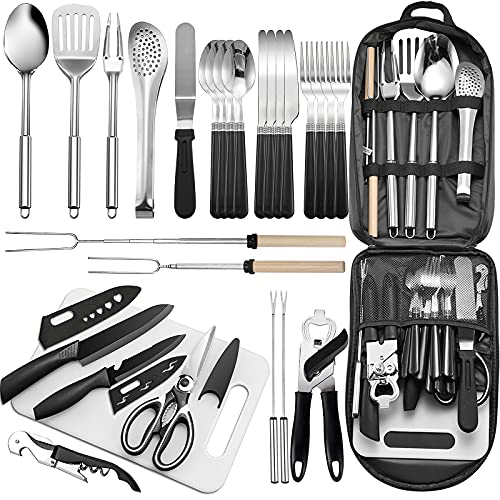
Portable Camping Kitchen Utensil Set- Cookware Kit Review — Practical cooking utensils from Freehiker, summarized from hub features and listed measurements. Key figures include 14.5, 9, 1.
Remember, the best camp kitchen is the one that fits your travel style and makes mealtime enjoyable. Use this guide as a starting point, and tweak your gear list as you discover what works for you on the road. Happy camping and happy cooking!
RV Camp Kitchen Checklist
Before you hit the road, use this handy checklist to make sure your RV camp kitchen is fully stocked and ready for adventure. Keeping a printed or digital list can help prevent those frustrating “I forgot the…” moments at the campsite.
- Cooking Gear: Camp stove or grill, fuel (propane/butane), lighter or matches, windscreen
- Cookware: Skillet, pot, saucepan, lids, Dutch oven (optional)
- Utensils: Spatula, tongs, serving spoon, ladle, whisk
- Prep Tools: Cutting board, chef’s knife, paring knife, peeler, grater
- Eating Gear: Plates, bowls, cups, mugs, forks, knives, spoons
- Food Storage: Resealable containers, zip bags, foil, plastic wrap, cooler/mini fridge
- Cleaning Supplies: Dish soap (biodegradable), sponge, scrubber, dish towels, drying rack, trash bags
- Other Essentials: Can opener, bottle opener, measuring cups/spoons, mixing bowl, oven mitts, hot pads
- Extras: Coffee maker or French press, spice kit, oil spray, collapsible sink, camp table
Customize this list based on your cooking style, dietary needs, and trip length. Doing a quick inventory before each trip ensures nothing gets left behind.
Common Camp Kitchen Mistakes (and How to Avoid Them)
Even seasoned RVers can make mistakes when it comes to setting up and using their camp kitchen. Here are some of the most common pitfalls—and how you can sidestep them:
- Packing Too Much Gear: Space is limited in an RV. Bringing every gadget from home leads to clutter and frustration. Stick to multi-use items and essentials.
- Neglecting Safety: Not securing propane canisters, using stoves too close to awnings, or leaving food unattended can be dangerous. Always follow manufacturer instructions and basic camp safety rules.
- Improper Food Storage: Failing to store food properly can attract wildlife or cause spoilage. Use sealed containers and keep perishables in a cooler or fridge.
- Forgetting Cleanup Supplies: Without proper dish soap, scrubbers, and towels, dishes pile up quickly. Always have a cleanup plan before you start cooking.
- Overlooking Weather Factors: Wind, rain, and cold can affect cooking. Bring a windscreen for your stove and consider a canopy or tarp for rainy days.
- Not Planning Meals: Winging it can lead to forgotten ingredients or wasted food. Make a meal plan and prep ingredients at home for easier camp cooking.
By learning from these common mistakes, you’ll have a safer, more enjoyable mealtime experience on every RV trip.
Camp Stove and Cookware Maintenance Tips
Taking care of your camp kitchen gear extends its lifespan and keeps it performing at its best. Here are some simple maintenance tips for your stoves and cookware:
- Clean After Every Use: Wipe down your stove and cookware with warm, soapy water. Avoid abrasive cleaners on nonstick surfaces.
- Inspect for Damage: Check hoses, seals, and connections on propane stoves for cracks or leaks. Replace damaged parts immediately.
- Store Dry: Thoroughly dry all cookware before storing to prevent rust and mildew, especially if you use cast iron or steel pans.
- Lubricate Moving Parts: Apply a small amount of oil to hinges or moving parts on grills and stoves as recommended by the manufacturer.
- Season Cast Iron: If you use cast iron, season it regularly to maintain the nonstick surface and prevent rust.
- Protect from Rodents: Store food and gear in sealed containers or totes to prevent critters from getting inside your RV or storage compartments.
Regular maintenance also includes checking expiration dates on fuel canisters and cleaning or replacing water filters if your kitchen setup includes a filtration system.
Camp Kitchen Essentials FAQ
What’s the best way to organize a camp kitchen in a small RV?
Use stackable bins, hanging organizers, and collapsible gear to maximize limited storage. Keep frequently used items in easy-to-reach spots, and group similar items together (like all utensils in one caddy). A dedicated outdoor kitchen tote can make setup and teardown much more efficient.
Can I use my indoor RV stove outside?
Most indoor stoves aren’t designed for outdoor use due to ventilation and safety concerns. Instead, invest in a portable camp stove or grill specifically made for outdoor cooking. These are safer and easier to clean after use in the elements.
How do I keep food cold without a full RV fridge?
Use a high-quality cooler with ice packs or block ice. Freeze water bottles to double as ice and drinking water. Store the cooler in a shaded spot, and open it as little as possible to keep contents cold longer.
What’s the easiest way to handle dishwashing at camp?
Set up a two-basin system: one for washing, one for rinsing. Use biodegradable soap and heat water on your stove for tough messes. Dry dishes with a microfiber towel or collapsible rack. Dispose of gray water responsibly according to campground rules.
Are there eco-friendly options for camp kitchen gear?
Yes! Look for reusable plates, bamboo utensils, silicone storage bags, and biodegradable soaps. Avoid single-use plastics whenever possible, and recycle packaging or containers when you return home.